

Persistent Echoes, the Italian section curated by Alessandra Arnò, Artistic Director of Visualcontainer, debuts at POSVERSO Bienal 2026, the Bienal Internacional de Poesía Experimental de Argentina.
Curatorial text
Del encantamiento y el horror — Italian section, POSVERSO 2026 (Bienal Internacional de Poesía Experimental de Argentina)
Persistent Echoes brings together seven video works that interrogate what lingers beneath the surface of the present: traces, memories, gestures, wounds, and forms of relationship that continue to operate even when their origins seem distant, removed, or almost imperceptible.
The title evokes a subtle persistence, a return that is not nostalgic but active. The echoes that permeate this selection do not reconstruct a lost past; rather, they open a listening zone in which the body, the earth, the word, the animal, matter, and image become sites of transformation. In each work, the poetic dimension is not separated from reality: it passes through it, exposing its tensions, revealing its fractures and possibilities.
The Italian section thus moves between performative practices, video art, visual poetry, sound research, and living ecologies. The selected works do not construct a linear narrative, but a constellation of apparitions: a devoured earth, a chasm, a shed skin, a voice returning from history, a night of flashes, an animal removed from the market, a work that unravels only to be reborn in another form.
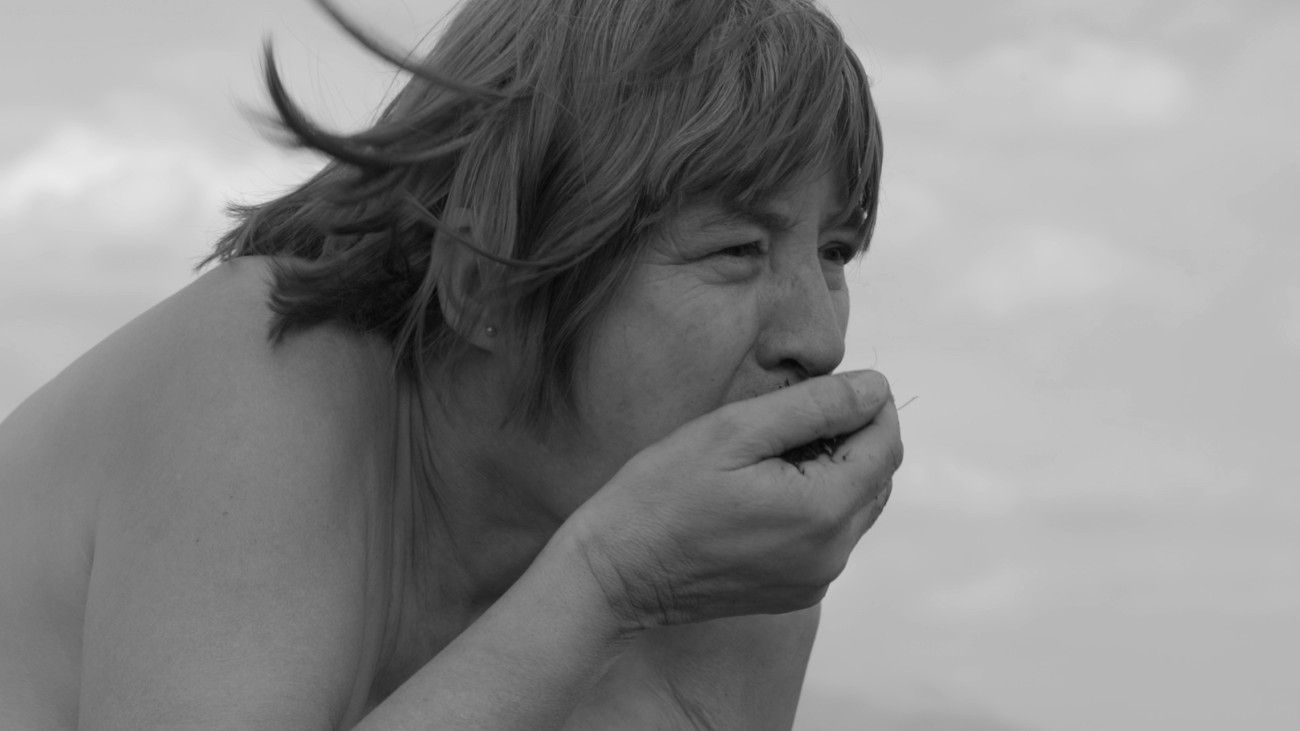
Bruna Ginammi’s Mother opens the sequence by reversing the myth of Cronus, who devoured his own children for fear of losing his throne: today, it is the children — us — who devour Mother Earth. In the few minutes of the video, we see the artist, clothed only by the sound of the wind, literally eating the earth, in an act that encompasses deforestation, industrial agriculture, climate change, intensive livestock farming, and the massive use of pesticides that end up in the soil and water. But Mother doesn’t stop at ecological criticism: it also reclaims a sacred and spiritual dimension of the relationship with the earth, echoing Andrea Staid’s words: “When you eat a potato, you eat your dead, because they are buried in the earth,” to remind us that protecting Mother Earth means protecting both our own health and the memory of those who came before us.
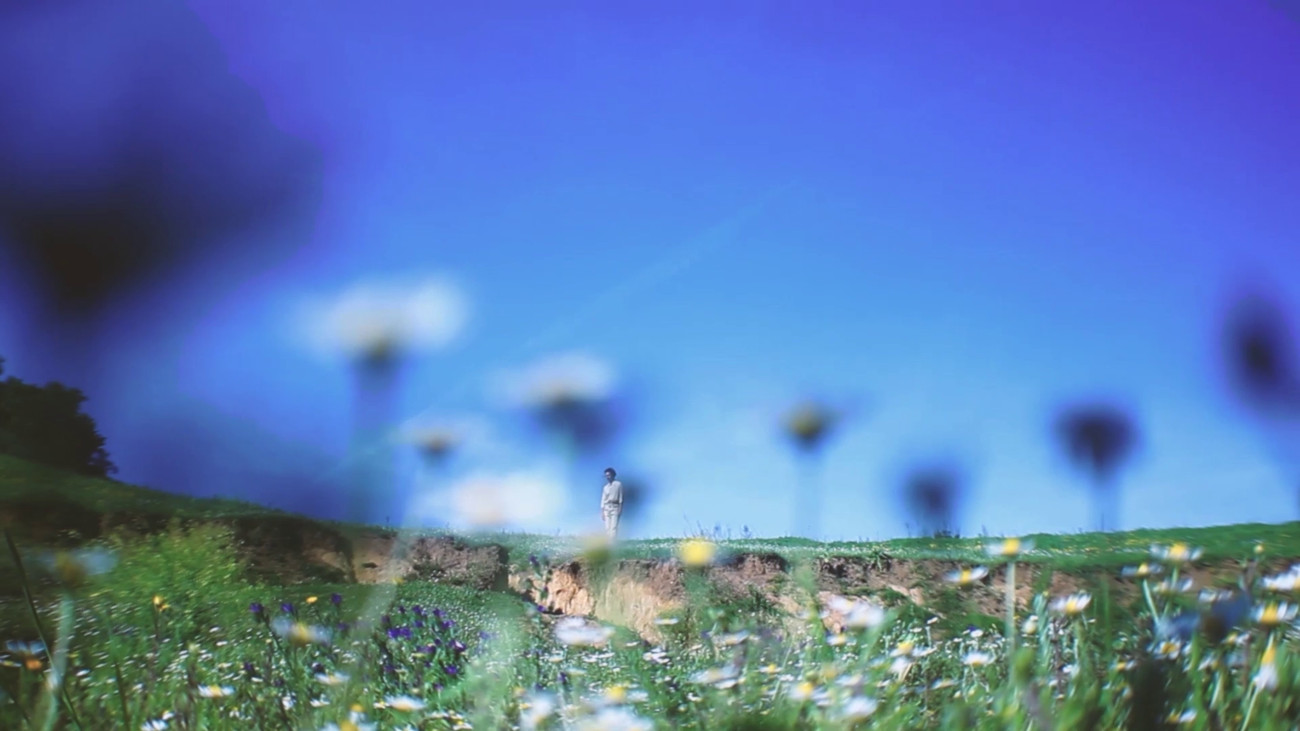
The devoured earth of Mother is matched, in another key, by a wounded earth. In Voragine, Dehors/Audela, the collective formed by Salvatore Insana and Elisa Turco Liveri, directs the gaze to the center of a hill split by a deep fissure: a warning, a sign, a cut orchestrated by the elements, a wound to be inhabited rather than observed. The video moves on the threshold of this opening as if on a dreamlike threshold, dreaming of Arcadia and then sensationally rediscovering it between the chasms of the earth and those of the imagination: the human body and the natural environment interpenetrate, evoking the most chthonic and ancestral energies. The editing itself, discontinuous, fragmented, eroded as if by water, disrupts the continuity of vision, just as the chasm disrupts the rhythm of walking and gazing, and questions us: how can we still feel connected to the land that hosts us, when even the image that tells it risks disappearing?
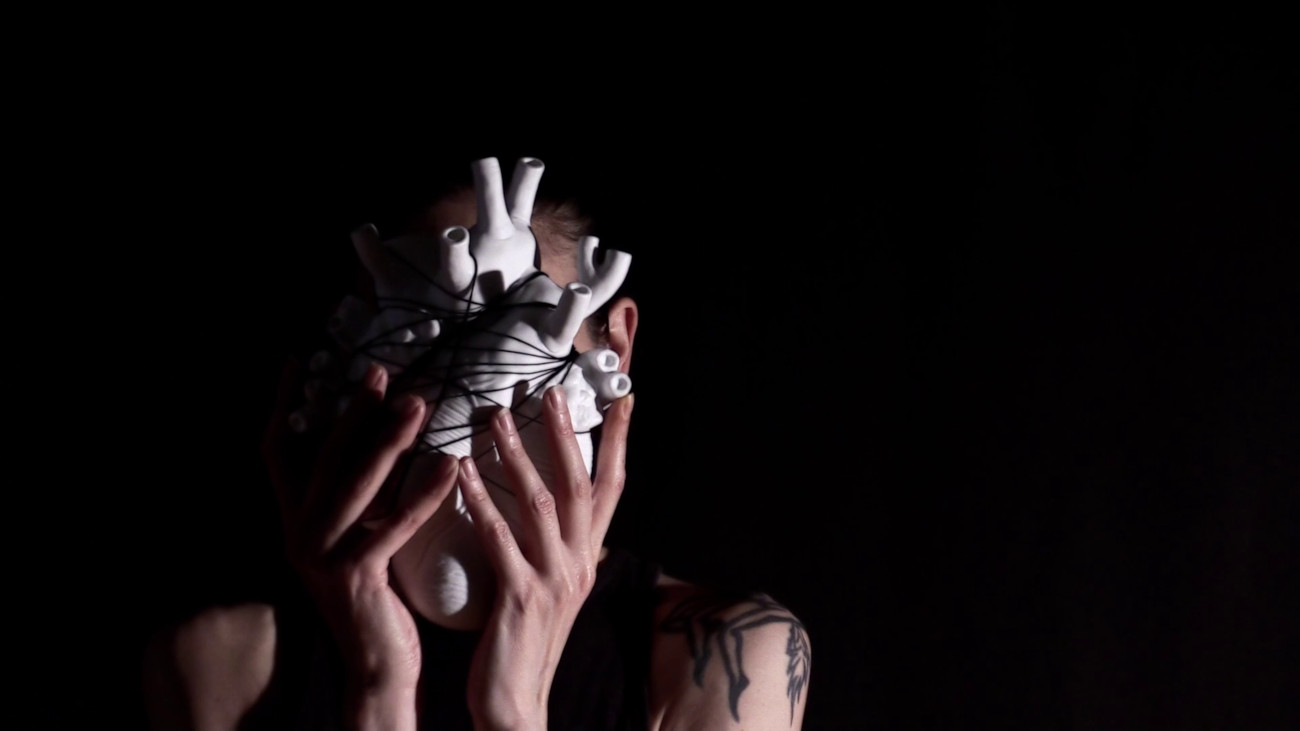
If Voragine inhabits the wound of the earth, Eleonora Manca’s Piccolo archivio del sollievo brings the same tension to the body, to the skin. Reading Lucretius, the artist rediscovers that “touch is the sense of the whole body,” and sets out in search of a new skin: a small archive, indeed, of attempts to shed skin again, to minimally and necessarily regenerate, in a work that condenses years of research into sensorial metamorphosis and the memory stored in the body into a few minutes.
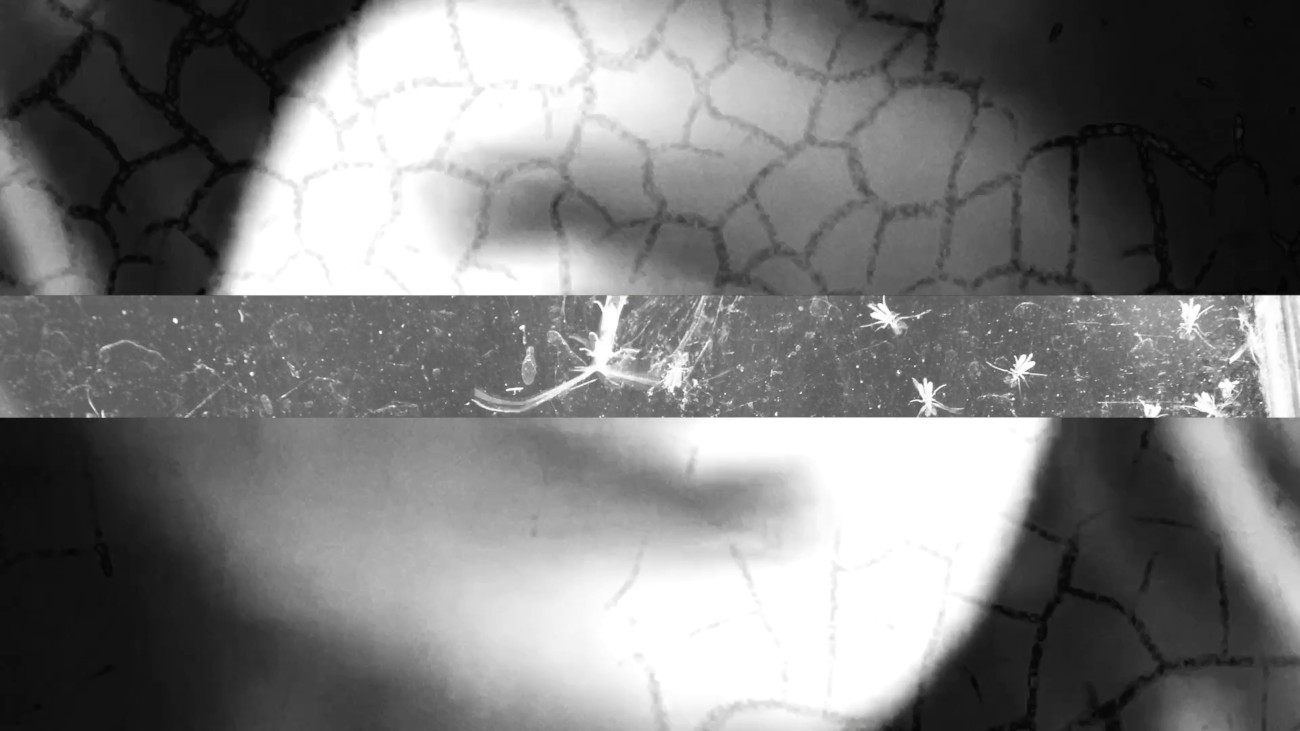
From touch to speech: in io vi vedo vivere / yo los veo vivir, zona|disforme, the video poetry project curated by Carlotta Cicci and Stefano Massari, brings the poetic word to the center of the work, intertwining an unreleased fragment of Stefano Massari’s Poema rotto with a reworked acoustic fragment of Paul Celan’s Todesfuge, recovered from the author’s original voice. The video does not illustrate the poem: it exposes it to a montage of bodies, surfaces, reflections, animals, and zones of disappearance, in unstable and ever-changing spaces where image, word, and sound intertwine to produce a perceptual experience permeated by the body, memory, and horror. The work thus questions the distance between seeing and believing, faced with the horror of history that Celan’s voice carries with it.
The word that exposes the horror of history is accompanied by more ancient knowledge. Le gnot dai lusôrs, from Friulian, the night of flashes or the night of miracles — by Isabella Pers tells of the night of San Giovanni, between 23 and 24 June, a magical moment that follows the summer solstice in the Friulian tradition: from sunset to dawn plants and flowers seem to condense a particular energy, collected in the ancient rite of gathering propitiatory herbs — St. John’s wort, lavender, rosemary, verbena, sage, artemisia and many others, to make the St. John’s bouquet. A ritual that the artist carries out together with her sister Tiziana, her son and some companions, in the fields around the RAVE refuge, where the animals and trees saved from farming and felling live: a passing of the baton that crosses generations and overcomes the gender dynamics linked to the ancient ‘wise women’, custodians of the knowledge of propitiatory and purification rites. The soundtrack of the work is also grafted onto that uncultivated land, to use the term of the anthropologist Adriano Favole, which is not chaos but «life that organizes itself, that germinates, that stratifies itself like corals». Ancestral knowledge and technology are not opposed here, but collaborate to restore listening to what precedes us and survives us.
Art_History / Vucciria documents a performance carried out in the historic Vucciria market in Palermo, where Tiziana Pers proposes to fishmongers to exchange the lives of still-alive fish intended for sale with a portrait created for each of them. The fish are then returned to the sea. Each animal saved, portrayed and released affirms a cosmology based on the coexistence between species, opposing the reduction of non-human animals to commodities and interrupting violence. Intertwining poetry, ritual and direct action, the work opens a breach in the productivist order and affirms the possibility of an ancestral and non-anthropocentric relationship with other living beings. Through a gesture of care that is both disobedience and transformation, Art_History embodies an art that is a form of resistance to the capitalist paradigm.
The selection closes with RE:STROY by Claire Guerrier, a cinematic and artistic exploration of the performative act with which Cristina Ohlmer undoes her own works GEHÄUSE I & II, two large glass objects, installed in the Markthalle Nord in Freiburg in December 2025. The film does not document the action: it re-edits it through a poetic and experimental language made of intimacy, fragmentation, and condensation, in which beauty, loss, danger and transformation are held together without resolution. It is a gesture that calls into question artistic production itself, destroying it and re-proposing it in other forms: even the world of art, in this selection, evolves and shows itself against cultural capitalism, rejecting the idea of the work as a stable object, a commodity to be preserved intact — a final act which is also, literally, a necessary mutation of the art form.
Taken together, these seven works make up a web of unpacified presences: wounded materials, vulnerable bodies, residual voices, animal and plant lives removed from marginality, artistic forms exposed to loss and mutation.
Persistent Echoes invites us to listen to this persistence. It does not seek reconciliation with the present, nor its orderly representation. The selected works act as frequencies that continue to propagate: they make perceptible what insists, what cannot be archived, what survives as a sensitive responsibility.
Alessandra Arnò
Curator, Italian section — POSVERSO 2026 Biennial
The works
1. Bruna Ginammi — Mother
Year: 2022 — Duration: 1’20”
Reversing the myth of Cronus, who devoured his own children for fear of losing power, the video today shows the children devouring “mother” earth. In the artist’s gesture, dressed only by the sound of the wind, the tragedies of deforestation, industrial agriculture, climate change and intensive farming condense together with a sacred and spiritual dimension of the relationship with the earth: “when you eat a potato you eat your dead, because they are buried in the earth” (Andrea Staid, Being Nature). Mother earth today asks to be protected, together with our own health.
Bruna Ginammi (Bergamo, 1964) lives and works in Milan. A photographer and video artist, she began her personal research in 1989, establishing herself in the Italian scene with the group exhibition “Lo sguardo del poeta” (SICOF, Milan, 1991) and winning the European Kodak Panorama Award at the Rencontres d’Arles in 1995. Her projects include the book Famiglie (2003) and Home, dedicated to the settlements of agricultural labourers in Rosarno.
2. Dehors/Audela — Salvatore Insana, Elisa Turco Liveri — Voragine
Concept: Dehors/Audela (Salvatore Insana, Elisa Turco Liveri) — Film, editing, sound: Salvatore Insana, with Elisa Turco Liveri — Year: 2024, Italy — Duration: 10′
At the centre of a hill, a deep fissure opens: a warning, a cut orchestrated by the elements, a wound to be inhabited. The video explores this opening as a threshold in which the human body and the natural environment interpenetrate, evoking chthonic and ancestral energies. The editing, discontinuous and fragmented, wounds the continuity of vision just as the chasm breaks the rhythm of walking and looking: we are made of fragments, fractured and eroded by water, seeking a connection still possible with the earth that hosts us.
Dehors/Audela is the collective founded in 2011 by Elisa Turco Liveri (performer, choreographer) and Salvatore Insana (videomaker, photographer, director, graduate of DAMS, Roma Tre), active across video-theatre works, dance performances, audiovisual research, urban and photographic installations, and experimental workshops. The collective’s research investigates border sites where the hybrid and the indefinite manifest, questioning the nature of images and the politics of the gaze.
3. Eleonora Manca — Piccolo archivio del sollievo
Year: 2021 — Duration: 2’06”
A video about a time when the artist tried to change skin once again. Reading Lucretius, she rediscovered that “touch is the sense of the whole body,” and set out in search of new skin: a minimal gesture of regeneration and relief, running through memory and body.
Eleonora Manca (Lucca, 1978) is a visual artist and writer who works through photography, video, video installations, visual poetry and artist’s books. A graduate in Contemporary Art History from Pisa, she specialised in Theatre and Performing Arts at DAMS Turin with a thesis on the Russian avant-garde. Her video Reverse Metamorphosis won the 9th edition of Magmart and is part of the permanent collection of CAM – Casoria Contemporary Art Museum. She lives and works in Turin.
4. zona|disforme — Carlotta Cicci, Stefano Massari — io vi vedo vivere / yo los veo vivir
Curated by: Carlotta Cicci and Stefano Massari — Texts: Stefano Massari (from Poema rotto, forthcoming), Paul Celan (from Todesfuge, the author’s original voice) — Image, editing, direction: Carlotta Cicci and Stefano Massari — Music: Stefano Massari — Year: 2025/2026 — Duration: 5’14”
A work built between poetic word, image and sound. The video does not illustrate the poem: it exposes it to a montage of bodies, surfaces, reflections, animals and zones of disappearance. The work interrogates the distance between seeing and believing, within unstable spaces in continuous transformation, where image, word and sound contaminate one another until they produce a perceptual experience traversed by the body, memory and horror.
zona|disforme is the video-poetry project curated by Carlotta Cicci and Stefano Massari, based in Bologna. Carlotta Cicci (Rome, 1984) is a poet, videomaker and photographer; she published the collection Sul banco dei pesci (L’Arcolaio, 2022, preface by Alberto Bertoni). Stefano Massari works across concept, direction, photography and editing; together with Cicci he created the television format SPIMÒ from 2018 and, in 2021, the 14-episode documentary series LA CURA, produced by the Fondazione del Policlinico Sant’Orsola in Bologna.
5. Isabella Pers — Le gnot dai lusôrs
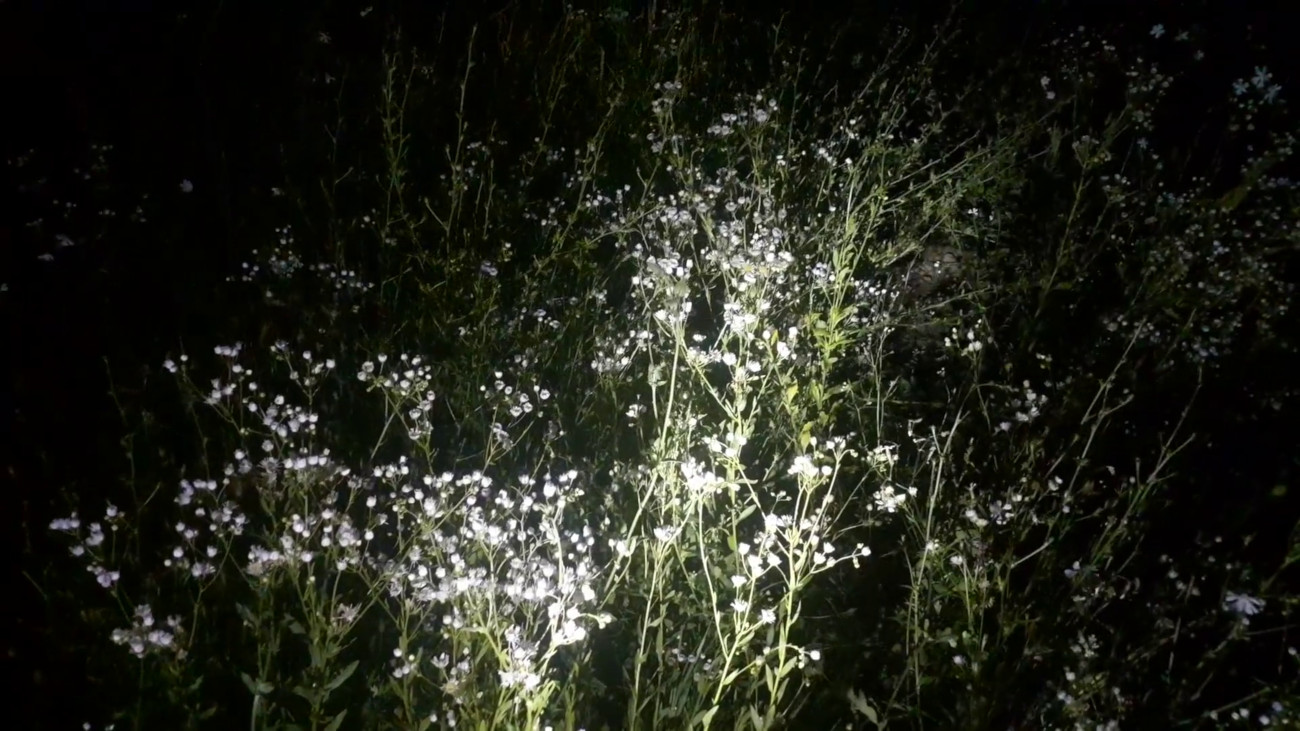
Title: Le gnot dai lusôrs (Friulian for: the night of flashes / the night of miracles) — Year: 2024 — Duration: 13’58” — Technique: video, colour, sound
The video tells of the night of San Giovanni (Saint John), between 23 and 24 June, a magical moment following the summer solstice in Friulian tradition. From dusk to dawn, plants and flowers seem to condense a particular energy, gathered in the age-old rite of collecting propitiatory herbs (St. John’s wort, lavender, rosemary, verbena, sage, mugwort and others) to make the San Giovanni bouquet. A ritual the artist performs together with her sister Tiziana, her son and a few companions, in the fields around the RAVE refuge, in a passing of the torch that crosses generations and moves beyond the gender dynamic tied to the ancient “wise women.” The soundtrack, created with musicologist Edoardo Taori through the Plants Play device, translates into notes the electrical variations of a centuries-old mulberry tree saved from felling, giving voice to a time that exceeds the human.
Isabella Pers lives and works in Friuli, where she develops her research through painting, participatory installation, performance, video, photography and drawing. The central themes of her work concern the observation of natural, social and cultural ecosystems, the impact of anthropocentric dominion on the life of the planet, and the search for a symbiosis among all living beings. She is co-founder, together with her sister Tiziana, of RAVE East Village Artist Residency, a participatory project promoting research, production and debate on contemporary art in dialogue with biocentric and antispeciesist thought.
6. Tiziana Pers — Art_History / Vucciria
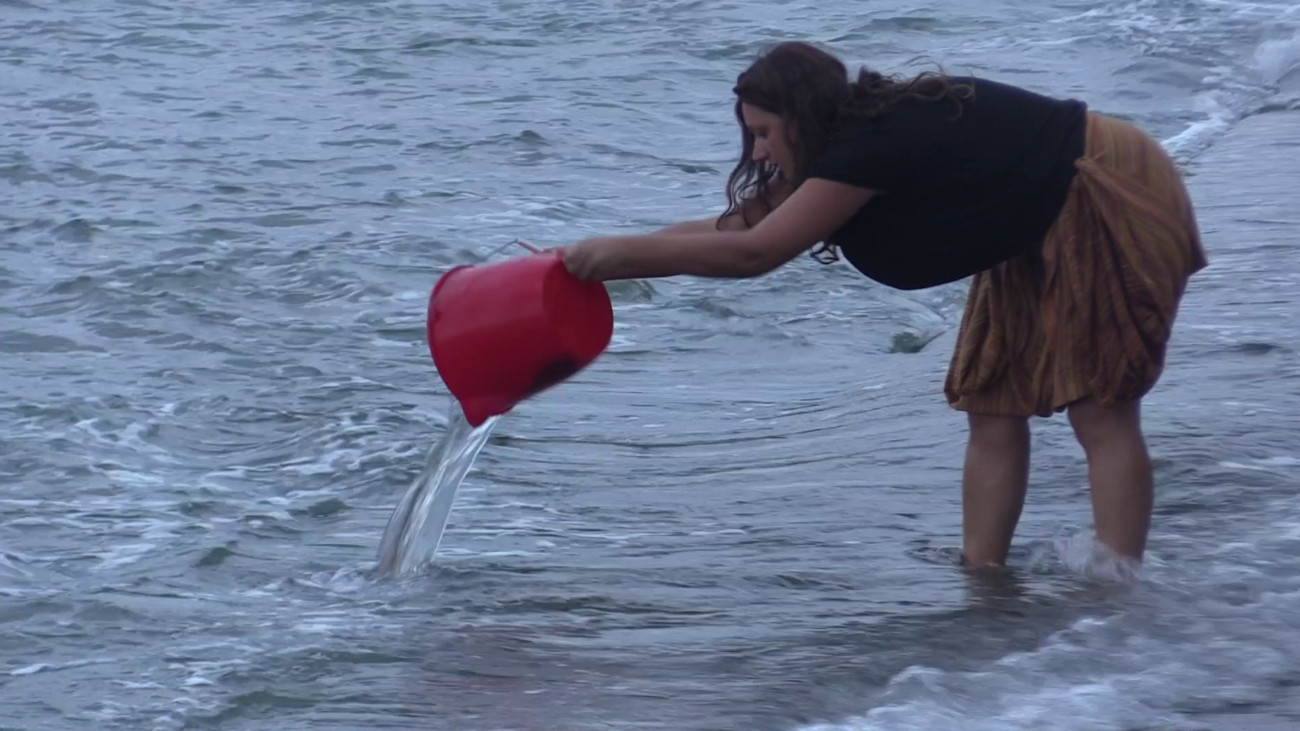
Year: 2018 — Duration: 6’26”
Art_History / Vucciria documents a performance carried out in the historic Vucciria market in Palermo, where Tiziana Pers offered fishmongers the possibility of exchanging the life of still-living fish for a painted portrait of each one. The fish were then returned to the sea. Each animal saved, portrayed and released affirms a cosmology based on interspecies coexistence, opposing the reduction of non-human animals to commodities and interrupting violence. Weaving together poetry, ritual and direct action, the work breaks the productivist order and affirms the possibility of an ancestral, non-anthropocentric relationship with other living beings. Through an act of care that is at once disobedience and transformation, Art_History embodies an art that configures itself as a form of resistance to the capitalist paradigm.
Tiziana Pers (b. 1976) lives and works in Trivignano Udinese. A visual artist and activist with first-class honours and a PhD in Comparative Literature from the University of Udine, she works across drawing, painting, performance, video and installation on the relationship between human and non-human animals and the connections among different forms of dominion and discrimination. She is co-founder and artistic director, together with her sister Isabella, of RAVE East Village Artist Residency, which hosts in the Friulian countryside animals rescued from slaughter through the Art_History project. In 2018, as part of Border Crossing — a collateral event of Manifesta 12 in Palermo — she created Art_History/Vucciria, exchanging live animals destined for sale with fishmongers at the historic market for painted portraits of the same dimensions: nine animals saved, nine contracts signed, nine lives returned to the sea or the land.
7. Claire Guerrier / Cristina Ohlmer — RE:STROY
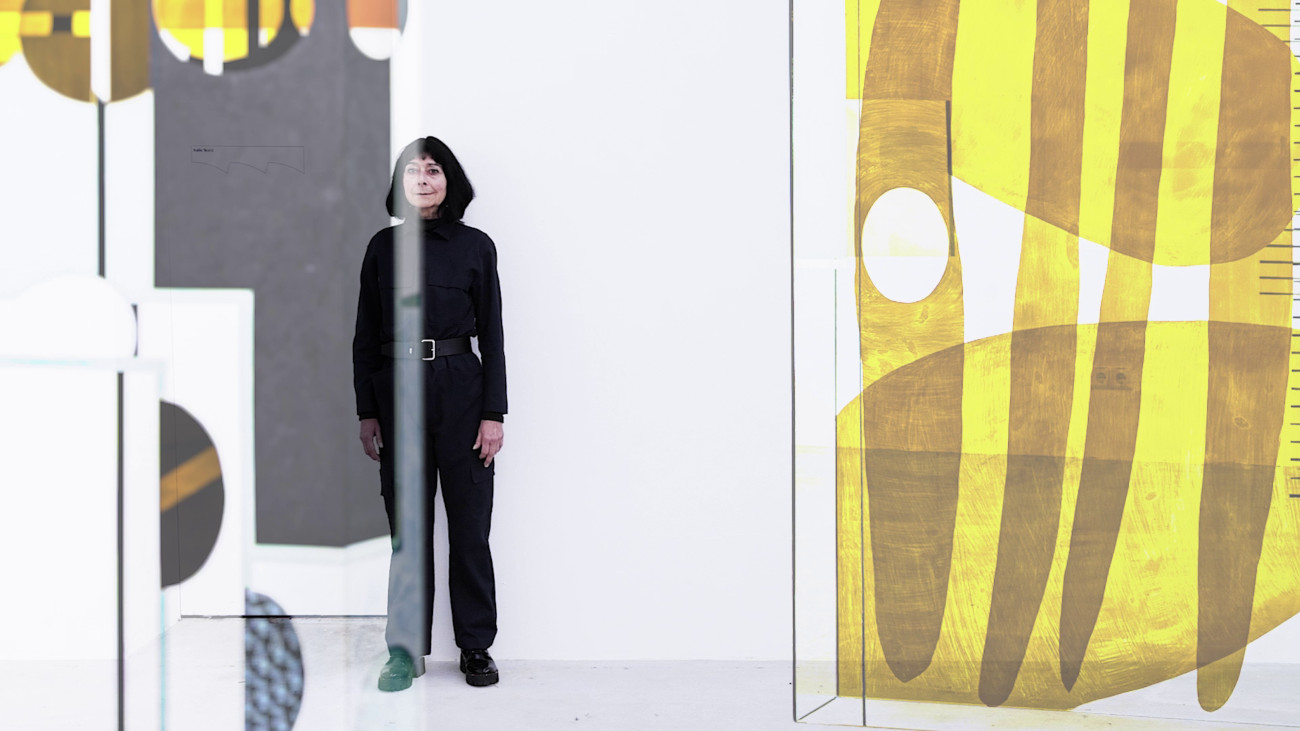
Artists: Claire Guerrier (film), Cristina Ohlmer (performative work) — Year: 2026 — Duration: 9’23”
A cinematic and artistic exploration of the performative act of transformation of the works GEHÄUSE I & II by Cristina Ohlmer (two large-scale glass objects), installed in the Markthalle Nord in Freiburg in December 2025 for filming. The film does not document the performative action, but re-edits it through a poetic and experimental visual language of intimacy, fragmentation and condensation: the tension between beauty, loss, danger and transformation.
Claire Guerrier, originally from Strasbourg, lives in Basel. Her work focuses on video art, for which she received the Basel Film Art Prize in 2010; her videos interweave different temporal, spatial and emotional layers into a dense, multi-layered visual language. Cristina Ohlmer, born in Italy, lives in Freiburg as an interdisciplinary artist working across drawing, light installations, film and performance; in 2022 she received the City of Freiburg’s Reinhold Schneider Prize for Art.
Presentations
- HOTEL DADA, centro de poéticas expandidas — Chávez 69, Junín, Buenos Aires (Argentina) — September 4, 2026
- 704 Oficina de Arte — Florida 336, 7th floor, Buenos Aires (Argentina) — September 10, 2026
Links
- Full exhibition page, complete curatorial text and technical credits for each work: POSVERSO Bienal — Ecos Persistentes
- Announcement: Ecos Persistentes, sección italiana de vídeo en POSVERSO BIENAL
- Biennial venues: POSVERSO Bienal — Sedes
- Curatorial team of the Biennial: POSVERSO Bienal — Equipo curatorial
- Biennial website: posversobienal.com.ar